

Ras Al Khaimah — Why This Emirate Should Be on Your List (And What You Won't See in Dubai)
Updated: Sep 2
Most people flying to the Emirates focus on Dubai. And rightly so — Dubai is incredible. But if you want to see the REAL Emirates — the ones with mountains, desert, history and tranquility — you need to visit Ras Al Khaimah.
Ras Al Khaimah (RAK) is the northernmost emirate of the UAE, just an hour's drive from Dubai. This is where the tourist crowds end and the real adventure begins. The Hajar Mountains reach nearly 2,000 meters, the mangrove forests are full of flamingos, and the old Dhayah Fort dates back to the Bronze Age.
Let me tell you a bit about the emirate's history and what's worth putting on your bucket list.
About Ras Al Khaimah
Ras Al Khaimah, often shortened to RAK, boasts a rich heritage of history, culture and natural beauty. With pristine beaches along the shores of the Arabian Gulf, the majestic Hajar Mountains as a dramatic backdrop and ancient archaeological sites telling stories of millennia past, the emirate offers a unique blend of tranquil landscapes and dynamic modernity.
Unlike its neighbouring emirates, where glass and steel skyscrapers dominate, Ras Al Khaimah offers a more relaxed and authentic experience of the Arabian Peninsula. Here, traditional dhows sail along calm bays, old forts stand as quiet witnesses to bygone eras, and vibrant bazaars tempt visitors with aromatic spices, perfumes and intricate handicrafts.
RAK's thriving tourism industry reflects its diverse attractions, from luxurious beach resorts and world-class golf courses to exhilarating desert safaris and adventures in the Hajar Mountains. As Ras Al Khaimah carves out its niche as a premium travel destination, it remains true to its roots, ensuring that visitors experience both modern comforts and the rich heritage of the Emirates. Whether you're seeking a peaceful retreat, a cultural immersion or an adrenaline-fuelled adventure, RAK promises an unforgettable journey.
What will you find in our guide?

Main Attractions
Dhayah Fort

Dhayah Fort in Ras Al Khaimah, situated 70 metres above ground level, is on the UNESCO World Heritage tentative list. Set amongst mountains and date valleys, it offers panoramic views stretching from the oasis to the shores of Oman and the sea.
The only surviving hilltop fortress in the UAE, it has roots in the Late Bronze Age (1600–1300 BC). Built in the 19th century from mud bricks, it witnessed the pivotal battle of 1819 between the British and the local Qawasimi tribes. Climbing its 239 steps reveals breathtaking views of palm gardens, the Hajar Mountains and the heart of the Dhayah oasis.
Below lies a larger fortification that in times of danger served the inhabitants of the nearby palm groves. Watchtowers positioned throughout the oasis ensured seamless communication. The fort is surrounded by historic irrigation systems fed by mountain run-offs. Additionally, 12 significant tombs from the Wadi Suq period showcase the funerary architecture of south-eastern Arabia.
Al Jazeera Al Hamra heritage Village

Pearls, prized since prehistoric times, have deep roots in the UAE, as confirmed by Neolithic discoveries. Al Jazeera Al Hamra, meaning "Red Island", is the only historic pearling village in the Persian Gulf to have survived the development of the oil industry.

The preserved village, with traditional features such as forts, watchtowers, mosques, bazaars and numerous residences, showcases a wealth of architectural styles. Buildings, from modest dwellings to grand merchant residences, made use of local materials: coral blocks, mangrove beams and layers of shells for water drainage. Around 1900, the village comprised approximately 500 houses, inhabited mainly by the Zaab tribe. Its leader, Sheikh Rajib bin Ahmed Al Zaabi, was a key signatory of the historic 1820 treaty with the British.
The thriving Zaab tribe had a well-developed pearling fleet and livestock farming. However, the decline of the pearl industry in the 1920s brought changes. The village was abandoned during the oil boom in the late 1960s and early 1970s.

Valuable archaeological finds include an ancient mosque with 20 domes, documented on British maps from the 1920s. With intricate gypsum screens, ornamental arches and a distinctive wind tower (barjeel: for passive cooling), the village is a testament to millennia of Middle Eastern architectural evolution.

Currently on the UNESCO tentative list, it stands as evidence of regional urban planning.
Mohammed bin Salim Mosque

Archaeological excavations at the site of the Mohammed Bin Salem Mosque revealed the existence of an earlier mosque from the late 18th century. This aligns with historical records indicating the presence of a mosque at this location as early as the 16th century. Unfortunately, the 18th-century structure was destroyed during the British occupation in 1819/20, but a new mosque was soon erected on its foundations. Over the years, the mosque underwent several renovations. In the most recent restoration work, modern additions were removed to reveal and restore its original coral stone architecture, which was then covered with layers of traditional plaster.
Date Farm

In the Emirates, there were two pillars of life — the sea and the date palm. Fish provided protein, whilst dates provided energy. Bedouins carried them on days-long journeys across the desert. Ancient Middle Eastern cultures called the date palm the "tree of life". Dates do not spoil without refrigeration, provide an instant energy boost and contain iron, potassium, magnesium and calcium — with zero cholesterol and minimal fat. Dates (Arabic: tamr) are one of the oldest cultivated fruits in the world (c. 6000 BC).

The date is the official national fruit of the United Arab Emirates. Ras Al Khaimah, with its fertile oases at the foot of the Hajar Mountains, is one of the most important date-growing regions in the UAE.
What does traditional farming look like?

The date palm begins to bear fruit after approximately 7 years, reaching full yield after 10 — a single mature palm produces 80–120 kg per year. But behind these numbers lies an enormous amount of work. Many farmers in the Emirates still deliberately use traditional methods. Palms are irrigated using the ancient Falaj system — a network of channels directing water from sources kilometres away. Mature palms are pollinated by hand, fruits are covered with muslin bags to protect them from birds, and some are removed early so that the remaining ones grow larger and of better quality. Harvesting is also done by hand — farmers climb ladders and cut the bunches with traditional curved daggers.

If you visit Ras Al Khaimah and climb the hill of Dhayah Fort, from the top you will see a sea of green date palms stretching all the way to the mountains and the Gulf. Right at the foot of the historic fort lies a farm that can be visited.
Which varieties should you try?
Three varieties worth looking out for in RAK:
Fard — dark, glossy, with an intense flavour
Medjool — large, soft, exported worldwide
Khidri — amber-coloured, with a taste reminiscent of raisins and caramel.
Khidri Dates Fard Dates Mejool Dates Fresh dates
Dates can be eaten fresh, straight from the palm, or dried. They can be stuffed with nuts, added to desserts, bread, or even savoury dishes.

When to buy?
The peak of the date season falls at the beginning of June — that is when you can buy fresh dates, prices at the markets are at their lowest, and the selection is at its greatest. But dried dates are available in RAK all year round.
Main activities
Desert Safari

Ras Al Khaimah in the UAE offers a glimpse into the heart of the Arabian Desert, where Bedouin camps and desert villages nestle amongst rolling dunes. This landscape is painted in vivid shades of flame and terracotta.

Bedouin life, dating back to 2500–3000 BC, is a testament to adaptation and resilience in the harsh desert environment. Their nomadic way of life is characterised by portable tents woven from goat, camel or sheep hair, providing shelter from the extreme conditions of the desert.
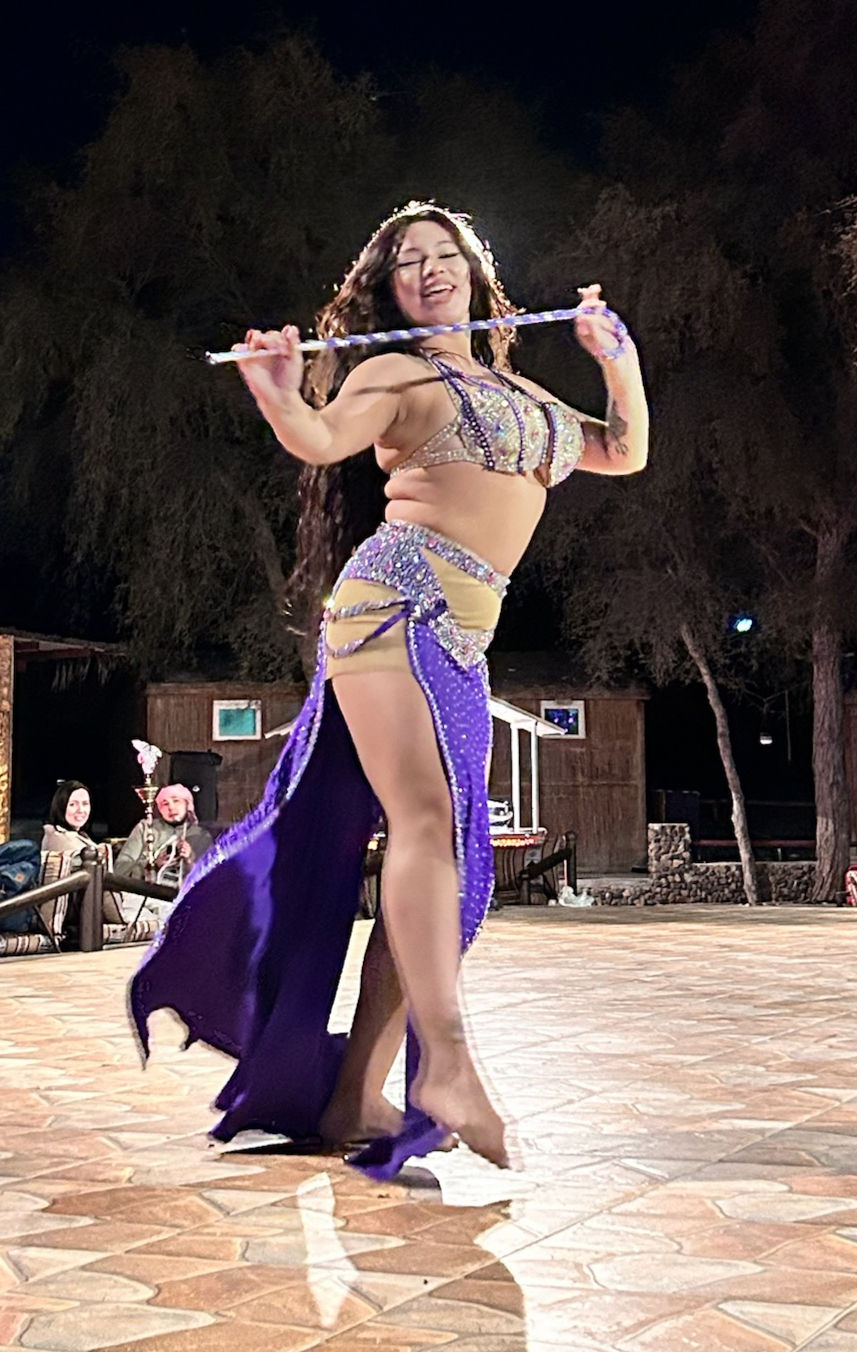
Evenings in the desert resonate with cultural richness. Bedouins recite ancestral poetry that echoes amongst the dunes, and their traditions include welcoming dances and hospitality, offering guests dates, coffee and stories. Bedouin culinary traditions, based on local produce such as goat meat and rice, are prepared using ancient techniques that give the food its distinctive flavours.

Today, visitors can immerse themselves in this rich culture through camel rides, sandboarding and savouring Bedouin cuisine. The experience is complemented by modern adventures such as dune bashing in 4x4 vehicles, creating an unforgettable blend of tradition and fun.
Check out everything you need to know about safaris in our article.

Al Sawan Camel Racetrack
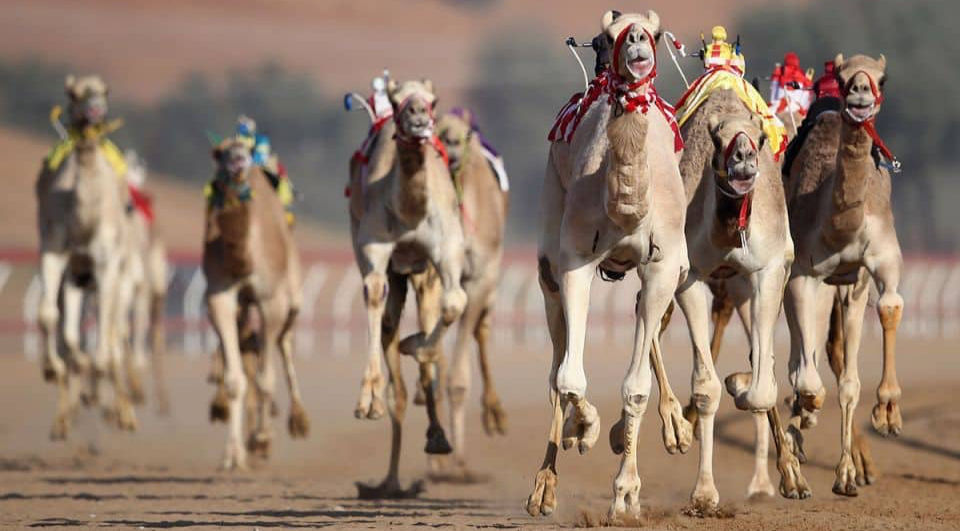
In the UAE, camels are not merely animals but symbols of Bedouin and Emirati pride, historically providing essential supplies and materials such as meat, milk, wool, leather and transport. Their significance extends beyond practicality, particularly in camel racing, as well as the belief in the healing properties of their urine.

Camel racing in Ras Al Khaimah is a tribute to this deeply rooted bond. Racing camels, selected from breeds such as Mahaliyat, Omniyat and Sudaniyat from the UAE, Oman and Sudan, are known as some of the fastest, reaching speeds of up to 65 km/h.

Morning races in the Digdaga and Hamraniya areas buzz with life, with trainers and owners competing for grand prizes, including luxury cars and cash awards. The racecourse is a spectacle, with 50 to 100 camels adorned in colourful tribal blankets, casting long shadows in the morning sunlight..
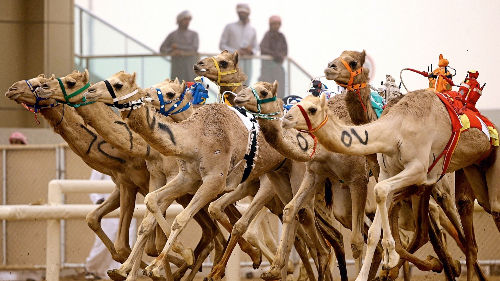
FUN FACT - only ladies race!!!

Introducing modern advancements, jockeys have been replaced by robot jockeys, equipped with sensors and radios, taking the place of the traditionally very young jockeys. This blend of tradition and technology provides trainers with valuable data and adds a contemporary touch to an ancient sport.
The races are not just about the camels; along the track, 4x4 vehicles race alongside, with trainers enthusiastically cheering on their camels, adding to the dynamic and thrilling atmosphere. Camel racing in Ras Al Khaimah is a colourful mix of tradition and innovation, offering an unforgettable experience.

Jebel Jais
Hiking
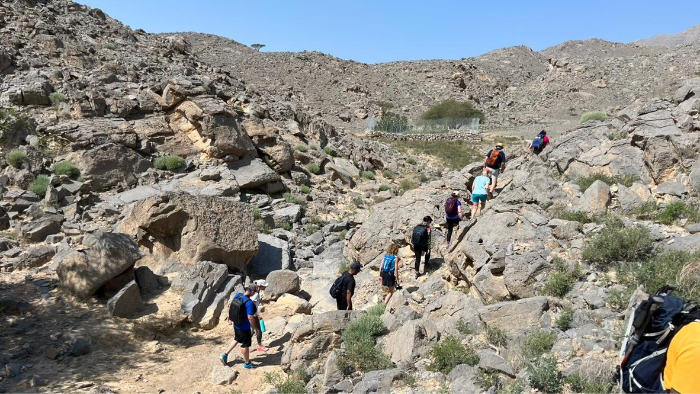
Ras Al Khaimah invites you to unforgettable adventures on Jebel Jais, which towers nearly two kilometres above the Persian Gulf.

This place is known not only for its stunning views but also for its rich history spanning over 70 million years. Jebel Jais, full of mysteries and antiquity, teems with life — from nimble mountain goats, through majestic eagles, to braying donkeys. The mountain offers a range of trails with a total length of 16 km, suited to both beginners and experienced hikers. These routes allow exploration of the diverse ecosystem of both the upper and lower mountain regions.

However, proper preparation is essential — you need not only stamina and appropriate hiking footwear, but also a head for heights. Key safety tips include: choosing a route suited to the least experienced member of the group, being aware of Jebel Jais's specific microclimate, especially in winter, hiking in company to ensure support in emergencies, informing someone of your planned route and estimated return time, using marked trails and a map, ensuring adequate hydration and packing snacks, as well as wearing appropriate footwear with good grip and dressing in layers.

In summary, Jebel Jais in Ras Al Khaimah is a blend of adventure and natural beauty. With proper preparation and adherence to safety guidelines, this expedition promises to be a thrilling and unforgettable experience.
Jais Sledders


Jais Sledder provides an adrenaline-fuelled ride, hurtling down the scenic Hajar mountain range. Reaching speeds of up to 40 km/h, the proximity to the ground makes every turn on this 1,840-metre descent feel even faster. The ride lasts approximately eight exhilarating minutes.
Built to the highest technical and safety standards, Jais Sledder complies with ISO 19202 norms, ensuring optimal safety and peace of mind. Each sled is designed for two people and equipped with seatbelts and a braking system, enhancing both control and fun.
Viewing Deck Park

Jebel Jais Viewing Deck Park is more than just a scenic spot; it is a gateway to a world shaped over 70 million years ago. The 30-kilometre journey to an altitude of 1,250 metres above sea level offers views ranging from lunar desert landscapes to green date palm farms.

The roads leading to the park are an attraction in themselves, ideal for cars, motorcycles or bicycles, cutting through red landscapes and dramatic cliffs. At the summit, seven viewpoints and 12 binoculars provide panoramic views of the Hajar Mountains, sand dunes and the tranquil expanse of the Arabian Gulf. The park, committed to sustainability, is powered entirely by solar energy at night.
Jais Flight - Longest zipline in the world


Jais Flight, located at the summit of Jebel Jais, is the world's longest zipline at 2.83 km. Participants experience flight over mountains and valleys at speeds of up to 150 km/h, 1,680 metres above the Arabian Gulf. This three-minute adventure offers unparalleled thrills, with speeds between 120 and 150 km/h, soaring over the canyons and peaks of Ras Al Khaimah.

A professional team ensures safety, equipping participants with a special suit and harness, which enhances the sensation of flying. The fastest section of the zipline ends on a glass-bottomed platform, suspended 80 metres above the ground, offering an impressive view, perfect for photographs. The adventure concludes with a gentler 1 km descent, taking participants back to the foot of the mountain.
Jais Sky Tour

A ride on the Jais Sky Tour is an exhilarating crossing along six ziplines ranging from 337 metres to over a kilometre in length. At an average speed of 60 km/h, this flight is an experience for those with nerves of steel.

Located at an altitude of over 1,600 metres, the Jais Sky Tour challenges adventure seekers with a series of ziplines, providing panoramic views of the Hajar Mountains.
The adventure connects seven platforms via six ziplines and lasts approximately 2 hours, with the highlight being a suspension bridge, hanging 300 metres above the ground.
Bear Grylls Explorer Camp

Located in the mountains of Ras Al Khaimah, Bear Camp offers adrenaline-fuelled adventures under the guidance of experts trained in the survival techniques known from Bear Grylls OBE's programmes. Participants acquire skills essential for survival in both mountain and desert environments. The camp provides challenges for adventure seekers, tailored to individuals, families or groups.

They are based on Bear Grylls' teachings, adapted to desert and mountain conditions. The focus is on British Armed Forces survival tactics, promoting self-defence methods and pushing personal boundaries. The main highlight of the offering is mountain survival courses based on Bear Grylls' methods. Participation of at least one adult and one child (aged 8–17) is required. The camp offers rustic accommodation with basic amenities. The price includes overnight stays in wild camping, meals and selected equipment. Completion of the course guarantees a Bear Grylls Explorers Camp badge, neck tube and certificate. Camp activities are weather dependent.

For less adventurous participants, the camp offers climbing lessons, abseiling, archery and a ropes course. The Jais Ropes Course at Bear Grylls Explorers Camp is an exhilarating obstacle maze 10 metres above the ground. Bear Grylls Explorers Camp is the perfect place for those who dream of a wild adventure, but with a touch of comfort.
Pearl Farm

Before the Emirates became a land of skyscrapers and oil, their wealth lay beneath the water — in oyster shells on the bed of the Persian Gulf. Pearls were harvested here as far back as 7,000 years ago, and diving for them shaped entire coastal communities. Pearl diving was not merely a profession — it was a way of life that shaped entire coastal communities from Bahrain to Ras Al Khaimah. This world vanished almost overnight, as the crisis following the First World War and Japanese cultured pearls flooded the market.

A tradition spanning millennia almost faded into oblivion (oil was only discovered later). Almost — because in 2005, Abdulla Al Suwaidi, a descendant of a multigenerational family of divers, opened a pearl farm in Al Rams in northern Ras Al Khaimah, in honour of his grandfather Mohammed. As a child, he was convinced his grandfather was half man, half fish — so long could he remain underwater, surfacing with pearls that would later be worn by royal families.

Today, Suwaidi Pearl Farm is the only Arabian pearl farm in the world. It lies at the foot of the Al Hajar Mountains, in a quiet fishing village surrounded by mangrove forests. A visit to the farm begins with a ride on a traditional boat through the mangroves, followed by the history of diving and the painstaking work of the divers.

You will then learn about modern farming methods, culminating in the highlight: opening an oyster live, with the chance of finding an Arabian pearl. You will also learn how pearls are classified and what determines their perfection. The farm runs on solar energy, and pearls from here have found their way into the collections of jewellery houses such as Van Cleef & Arpels and Mouawad. This is a place where you can touch the history of the Emirates in a way that no skyscraper in Dubai can offer.
History
Overview
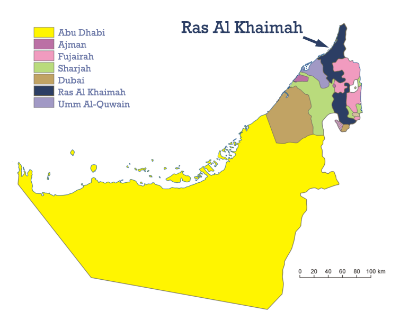
Ras Al Khaimah (RAK) is one of the seven emirates that make up the United Arab Emirates. It is located in the northern part of the country and takes its name from the emirate's capital.
"Ras Al Khaimah" translated:
ras: head / tip / peninsula
khaimah: today this word means tent; in the old dialect it referred to houses with pointed roofs built from palm fronds.
Loosely translated, the name meant Peninsula of Palm Frond Houses.
The city is divided by a creek into two main districts: the Old Town and Nakheel. Beyond the city, the emirate also encompasses various villages, new residential developments and the stunning Hajar Mountains to the north-west.
Archaeological Significance
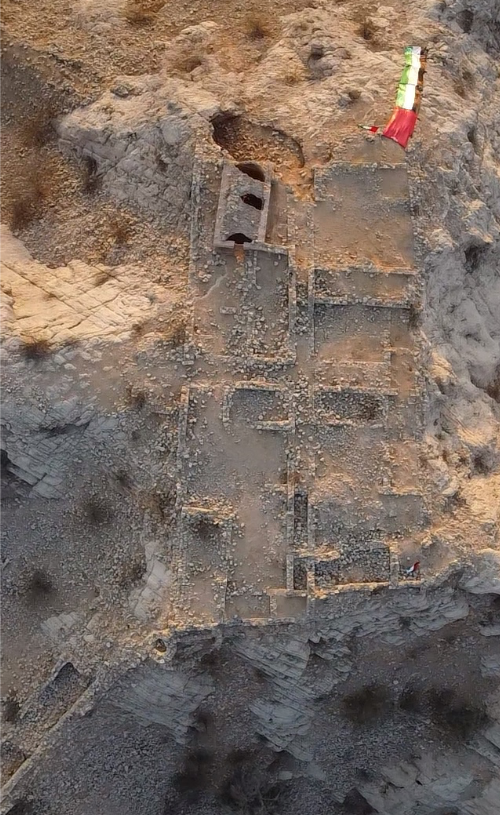
The historical significance of RAK is deeply rooted, with approximately 7,000 years of continuous human habitation of the local area — a rarity both here and worldwide. The emirate is dotted with numerous historical and archaeological sites. In the Shimal area in particular, one can find relics of the Umm Al Nar and Wadi Suq civilisations. These sites paint a vivid picture of the local way of life, trade and customs of the region.
Julfar & Emergence of RAK
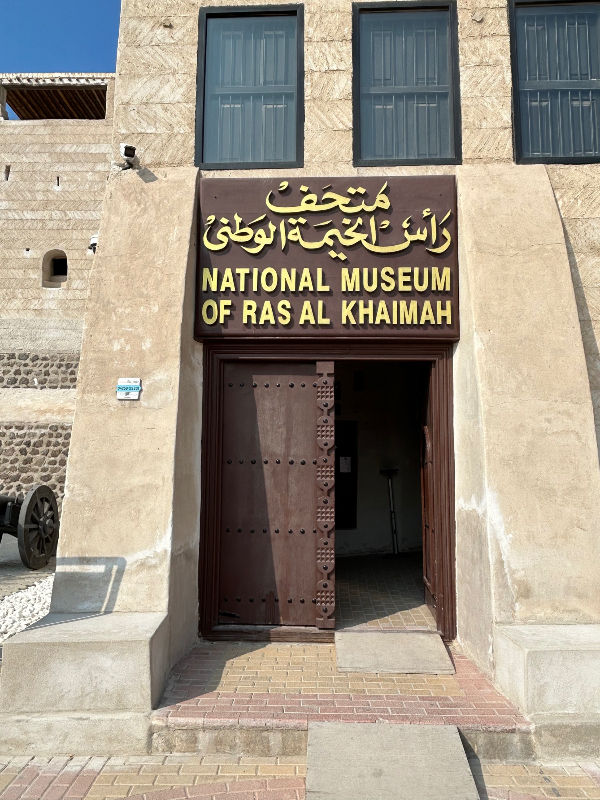
Julfar (as the city was once known), a medieval port town, is a testament to RAK's vibrant trading history. Over time, as the port of Julfar silted up and became overgrown, the region now known as RAK began to expand and eventually absorbed the areas that were once part of Julfar. Julfar was important not only for trade but also for its inhabitants, such as Ibn Majid, an influential navigator and cartographer.
Shihab al-Din Ahmad ibn Majid

Few people know that Ras Al Khaimah also has its own great maritime legend. Ibn Majid, the famous 15th-century Arab navigator and sea pilot, is widely associated with the ancient port of Julfar — the historical predecessor of today's RAK. It is with this place that one of the most fascinating figures in the world of Indian Ocean navigation is linked.

Ibn Majid became renowned for his extraordinary knowledge of stars, winds, sea currents and trade routes. In an era when modern navigation did not exist, sailors had to rely on experience, observation of the skies and knowledge of the sea. Ibn Majid was a master of this art, and his expertise helped guide ships through the waters of the Gulf, the Arabian Sea and the Indian Ocean, as far as India and the coasts of East Africa.
Today, his legacy serves as a reminder that Ras Al Khaimah is a place with a rich maritime heritage. The story of Ibn Majid shows that this region has for centuries been an important point on ancient trade routes and part of a world of great voyages, merchants and seafarers.
The Maritime Legacy & British Involvement
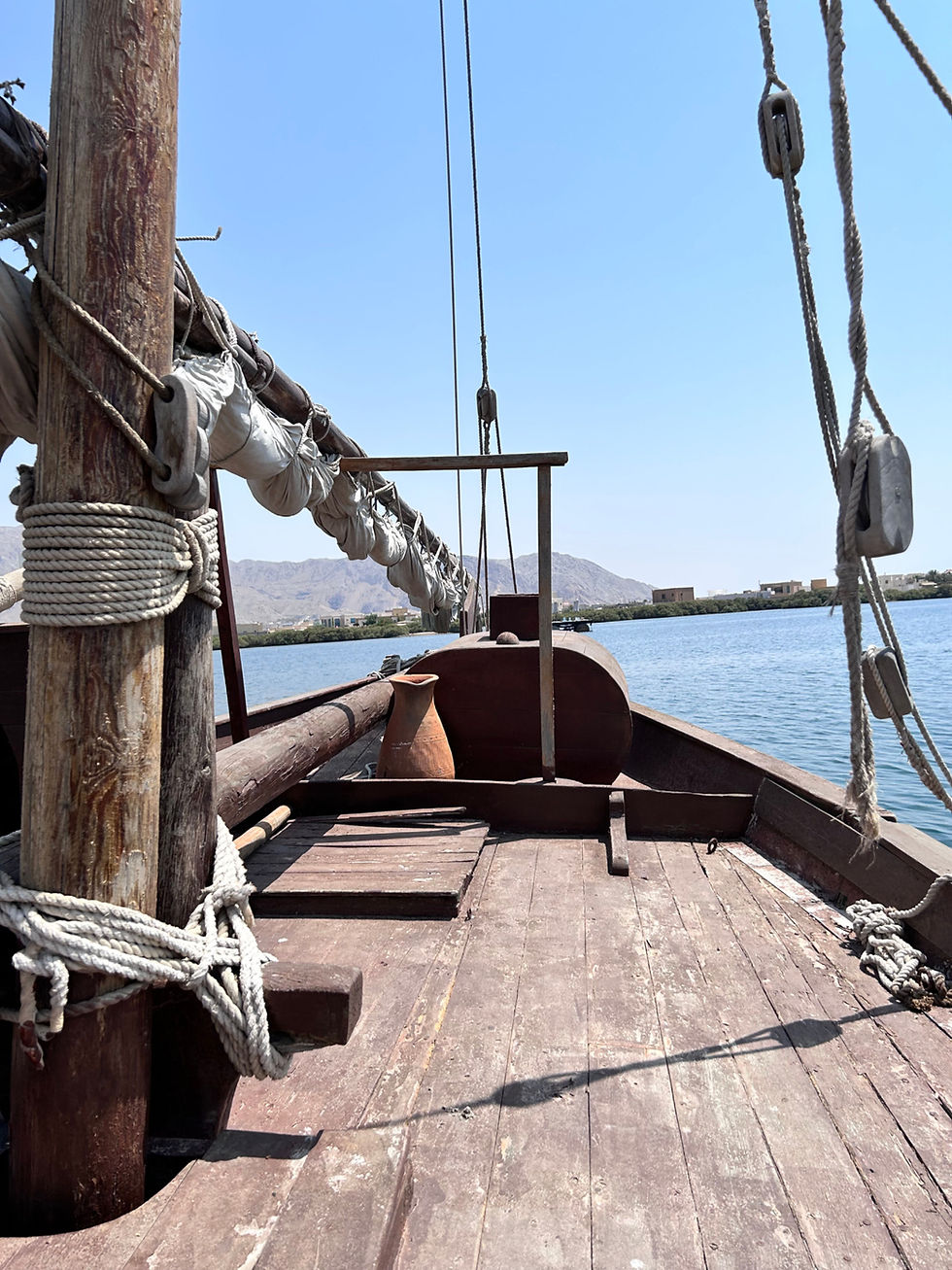
The 18th century was turbulent for RAK, marked by maritime confrontations. British accounts described the region as the 'Pirate Coast', pointing the finger at the alleged maritime piracy of the Al Qasimi clan. However, historical interpretations differ. Some see the Al Qasimi as a significant maritime power with territories on both the Persian and Arabian coasts, which naturally led to conflicts with British trade routes. As tensions escalated, the British carried out two notable Persian Gulf military campaigns in 1809 and 1819, aimed at curtailing Al Qasimi influence.
Geopolitical Shifts in the 19th Century

The 19th century brought changes to RAK's geopolitical status. The General Maritime Treaty of 1820 with the British marked the end of piracy and the beginning of the era of British protectorate over the Trucial States. The treaty was signed at Falayah Fort in Ras Al Khaimah.

Initially, the treaty was signed by representatives of: Abu Dhabi, Sharjah, Dubai, Ajman, Umm Al Quwain, Ras Al Khaimah, Rams, Jazirat Al Hamra and Bahrain. Fujairah was not among the signatories of the 1820 treaty; its separate recognition came later.
Despite RAK's declaration of independence in 1869, the following years saw its merger with Sharjah until 1921. To this day, RAK and Sharjah share the same flag and both emirates are governed by the Al Qasimi tribe.
Integration into the UAE
The modern era of RAK began with the pivotal decision to join the United Arab Emirates on 10 February 1972 — as the last, seventh emirate in the federation, over two months after its official establishment on 2 December 1971.

The path to union was not straightforward. The very idea of a federation was born in 1968, when Great Britain announced its intention to withdraw its forces from the Gulf region by the end of 1971. The initiative was taken by the rulers of the two most powerful emirates — Sheikh Zayed of Abu Dhabi and Sheikh Rashid of Dubai, who at a historic meeting on 18 February 1968 at the border of their emirates agreed to join forces in matters of foreign policy, defence, security and social services. Initially, Bahrain and Qatar were also to join the federation, but both states ultimately chose independence.
Sheikh Saqr bin Mohammed Al Qasimi, the ruler of RAK, participated in the federation negotiations but was not convinced by the proposal of July 1971. It envisaged a majority voting system in the Supreme Council, with the mandatory participation of Abu Dhabi and Dubai — as the main contributors to the federation — instead of unanimity. Sheikh Saqr asked for more time to consider. The remaining six emirates signed the provisional constitution and on 2 December 1971 announced the establishment of the UAE — without Ras Al Khaimah.
Meanwhile, the geopolitical situation escalated dramatically. On 30 November 1971 — just two days before the establishment of the UAE — the Iranian navy seized the islands of Abu Musa and Greater and Lesser Tunb in the Strait of Hormuz. Greater and Lesser Tunb had belonged to RAK for generations, and their loss was a blow to the emirate. Sheikh Saqr refused to accept any financial compensation from Iran, replying to the British mediator: "Nations are not sold for money."

Paradoxically, it was precisely this loss of the islands that accelerated the decision to integrate. The island incident was the factor that ultimately convinced the rulers of RAK that the emirate would benefit from unity with the rest of the federation — on its own, it stood no chance of effectively defending its territorial interests against the considerably more powerful Iran. After a long evening discussion, a consensus was reached: Ras Al Khaimah would join the union and play its role "at the heart of the federation."

Sheikh Saqr set off for Al Manhal Palace in Abu Dhabi on the morning of 11 February 1972 — his Mercedes speeding across hundreds of kilometres of desert, escorted by two military pick-up trucks. At the palace, he signed the provisional constitution and the UAE took its final shape of seven emirates.
The question of the islands of Abu Musa and Greater and Lesser Tunb — which to this day remain under Iranian control — continues to be the subject of a territorial dispute between the UAE and Iran.


rr88 com đang bị bàn tán đủ kiểu trong mấy topic về sân chơi online nên mình cũng ghé xem thử cho công bằng, kiểu vẫn hơi nghi nghi nhưng đọc một lúc thì thấy họ trình bày khá gọn, kéo xuống là từng đoạn tách riêng chứ không quăng nguyên mảng chữ dài, nên lướt nhanh vẫn nắm được ý chính. Mình thích nhất là họ để phần nói về nguồn gốc với pháp lý khá rõ ràng, không phải đào sâu mới thấy. Menu đặt chỗ dễ nhìn. Chuyển trang cũng mượt. Nói chung cảm giác làm web đàng hoàng. Mình chỉ xem giao diện với cách bố cục thôi. Phần thông tin nguồn gốc pháp lý được…
Mình thỉnh thoảng cũng xem soi cầu kiểu cho biết, coi như một cách tự tập nhìn dàn số và đối chiếu lại linh cảm của mình. Hồi trước hay nghe người quen mách nước rồi ghi bừa, trượt là khó chịu lắm, nên giờ mình ưu tiên đọc mấy bài có giải thích đàng hoàng hơn; đúng sai gì thì ít nhất cũng học được cách họ lập luận. Có dạo mình lướt thấy https://soicauxsmb.pro/ và họ có nhắc chuyện chọn lọc theo chu kỳ, mình thử áp dụng theo kiểu giảm bớt lựa chọn chứ không đặt niềm tin tuyệt đối, thấy đầu óc bớt bị cảm xúc kéo đi. Với mình mấy thứ này chỉ nên xem…