

Pre-travel tips
Updated: Sep 2

We'd like you to have a fantastic time in the Emirates. As with any country, there are certain laws and customs here that are worth knowing about so you can fully enjoy your trip. We're sure you have plenty of questions — not just about cultural nuances, but also about practical matters such as currency, electrical sockets, public transport, and more. This guide is designed to give you the essential information you need to be well prepared for your adventure. If you have any additional questions, do write to us! We'll add more tips!
The questions and discussion topics you ask us most often: (tips)
Best time to holiday

The UAE is now set up to welcome tourists all year round, thanks to the many indoor attractions that make the summer heat more bearable. That said, the tourist season runs from November to April, when the weather allows you to enjoy a wide range of outdoor activities — both physical and cultural. Daytime temperatures range from around 25 to 35°C, and humidity is manageable.
Outside this period, the combination of heat and humidity makes outdoor activities considerably less appealing, and in the height of summer practically impossible. Swimming pools are generally cooled and water parks operate year-round, but the heat is extreme and can be an unpleasant experience for most people, particularly between June and August. That said, the country is well prepared for this climate and is fully air-conditioned, with plenty of indoor theme parks, shopping centres, and venues that can easily fill a holiday — if that's the kind of trip you're after.
For more information, please see our page on the weather.
How to get to the UAE?

The best way to reach the United Arab Emirates is by plane (although you can also arrive by ship). Each Emirate has its own international airport, but not all of them are served by direct flights. Direct scheduled flights arrive at:
Good places to search for flights, compare prices, or check connecting routes include:

It's worth checking directly on the websites of carriers from your country. If you are unsure who flies to a particular airport you can check it on the airport's website.
List of UAE carriers below:
 |  |  |  | |
ABU DHABI | DUBAI | SHARJAH | ||
Airport Transfers
There are plenty of options for transfers from airport to your accommodation. The journey of can be made using:

Adventurous Camel: We offer private airport transfers. Get in touch with us and we'll arrange a comfortable journey for you!
Taxis: There are plenty of airport taxis available at the airport. They are fitted with meters and will take you directly from the airport to your hotel. The fare typically depends on the time of day and the exact location. It's worth noting that an additional charge may apply for journeys that cross emirate borders. When you pick up a taxi at the airport, make sure you get into a Public Taxi:
 | Dubai Taxi Company - beige with a red or pink roof; other colours indicate private companies (minimum fare 12 AED, flagfall: 5–25 AED, SALIK 5 AED, approximately 2.26 AED per kilometre, 20 AED surcharge for trips to Sharjah). |
 | Abu Dhabi Mobility - silver with a yellow sign on the roof (minimum fare 12 AED, flagfall: 4/5 AED, approximately 1.82 AED per kilometre) |
 | Sharjah Taxi - white with a blue or pink roof (minimum fare 14 AED, flagfall: 3–25 AED, approximately 0.25 AED per 155 metres, 20 AED surcharge for trips to another emirate) |
 | Umm Al Quwain Taxi - mostly white with a yellow sign on the roof (minimum fare 12 AED, flagfall: 12 AED, approximately 2 AED per kilometre) |
 | Ajman Taxi - mostly white with various roof colours, including pink for ladies (minimum fare 12 AED for standard taxi, 10 AED for ladies, approximately 1.89 AED per kilometre). All accept cash, credit cards, and the Masaar card. |
 | Ras Al Khaimah Taxi - white with a blue roof (or pink for ladies) and a yellow sign on the roof (minimum fare 6 AED, flagfall: 4–5 AED, approximately 1.83 AED per kilometre, 15 AED surcharge for trips to other emirates, 2 AED service fee) |
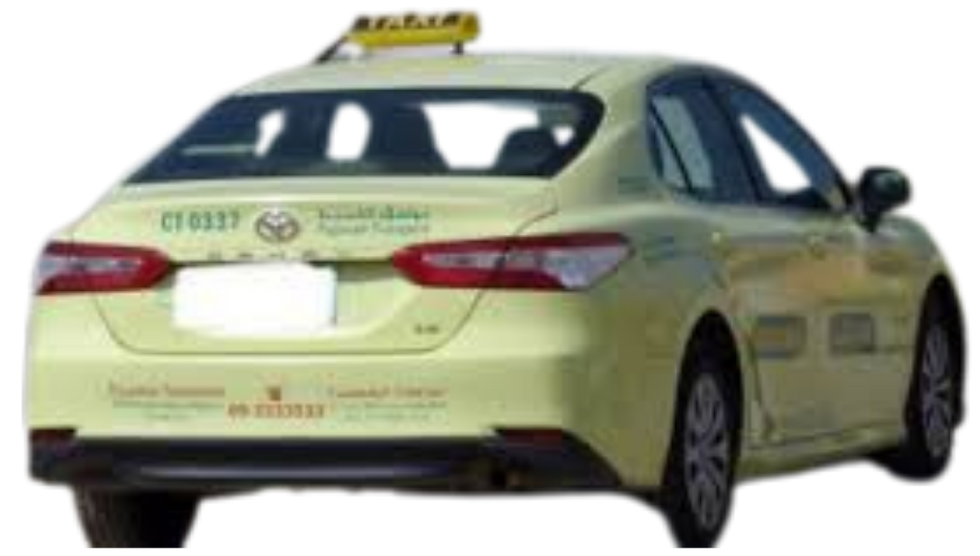 | Fujairah Taxi - yellow cars (minimum fare 6 AED, flagfall: 10 AED, approximately 2 AED per kilometre). Unfortunately, there is no official price source — it's best to check in the Careem app when booking a Hala taxi. |
At the airport there will be plenty of people offering taxi services in private cars — these are considerably more expensive (though safe). Services can also be booked through apps such as CAREEM, BOLT, UBER, and S'hail. All forms of payment are accepted in taxis: credit cards, Apple Pay, Samsung Pay, and Google Pay. And of course, you can always pay in cash!

Car rental: Many international and local car rental companies operate at the airports. Renting a car can be a good option if you're planning to travel around a lot during your stay. Just remember to check the local driving rules and requirements before you hit the road.
(Europecar, Thrifty, Sixt, Herz, Alamo, Budget, Avis, Dollar, Enterprise, Autostrad, Car Rental Dubai)

Hotel airport transfers: Many hotels and resorts offer complimentary airport transfers for their guests. It's worth checking with your accommodation to see if this is available.
When choosing your mode of transfer, consider factors such as budget, number of people, amount of luggage, and the time you have available.
Where to stay
When it comes to accommodation in the Emirates, visitors are spoilt for choice, as the UAE offers a diverse range of places to stay to suit every budget and preference. Whether you're on a family holiday, a romantic getaway, or a solo adventure, there's something here for everyone. For detailed information on available accommodation, visit booking sites such as:


Bear in mind that availability can vary depending on the season and local events, so booking in advance is recommended. Wherever you choose to stay, the Emirates offer a wide range of accommodation options to make your stay comfortable and memorable.
Power points

The United Arab Emirates uses Type "G" plugs and operates on a 230V power supply at 50Hz. International adapters will allow you to plug into local sockets, so it's a good idea to bring one with you to avoid having to hunt one down after you arrive. You can also ask at your hotel whether they can lend you an adapter, though this often isn't possible. If your electrical devices run on a different voltage in your home country, you may need a suitable voltage converter or transformer, which you can either bring with you or buy locally.
Currency
The official currency is the dirham (AED), which is pegged directly to the US dollar, so 1.00 USD = 3.67 AED. There are plenty of banks and currency exchanges throughout the UAE and at the airport where you can change money.
1 dirham equals 100 fils. Fils are coins and can be rather confusing, as they have only Arabic markings on them. Fils come in denominations of 50, 25, 10, 5, and 1. You're very unlikely to ever come across 1, 5, or 10 fils coins — change is rounded up and given in 25 or 50 fils coins.

Dirham banknotes come in denominations of 5, 10, 50, 100, 200, 500, and 1000. The minimum amount you can withdraw from an ATM is 100 AED, or multiples thereof. The UAE recently went through a redesign of its banknotes, so you'll come across two different designs for most denominations.

Most shops and venues accept credit and debit card payments with Visa or Mastercard logos, although other credit cards (e.g. Amex, Diners Club, etc.) are less widely accepted. You should also carry some cash on you for expenses such as the occasional taxi fare, purchases at local markets (known as souqs), or tips.
When withdrawing money from ATMs or paying by card, always choose the local UAE currency whenever that option is available, to avoid higher fees that come with selecting your home currency.
Tipping
You are not obliged to tip in the UAE, and service charges are included in the prices at most restaurants and hotels. However, keep in mind that service charges typically go to the owner of the establishment, and service staff often don't earn high wages — so giving a small tip directly to staff when you've received good service is generally welcomed and encouraged. This might be anywhere from 10 to 100 dirhams, depending on the situation, the quality of the service, and the size of the bill.

On top of that, the UAE is heavily integrated into the global economy. Many workers here do basic jobs such as car washing, carrying shopping, delivering food, or street cleaning. Their wages are very low, and if you find a chance to give them 5 or 10 dirhams for whatever service they've provided, it will likely mean far more to them than it does to you. That said, this is a matter of personal choice and, again, not required.
Behaviour in Public Places

It goes without saying that you should behave in a way that shows respect for the local culture of the country you're visiting. The United Arab Emirates is relatively liberal and open, with people from all over the world making this country their home — but the law is strict with those who overstep its boundaries, so it's worth knowing what is and isn't acceptable.
Public drunkenness, swearing, and rude or offensive behaviour towards anyone in public places is not tolerated in the UAE — as it might be in many other countries — and you risk running into trouble with the law if you offend the wrong person.
In Dubai, all the world's religions and cultures mix together, and the local population is open to curiosity about their culture. This can be difficult for outsiders to grasp — the deeply integrated nature of religion and daily life means you can unintentionally cause offence. A careful and sensitive approach to these matters is recommended, and it's best to avoid religious discussions.
You should always show respect for local systems and ways of life. After a while, you come to realise that these aspects of life don't really define a person, and you can form wonderful friendships without delving into, or debating, the personal belief system that guides someone.
Interactions Between Women and Men
Overt displays of affection, including passionate kissing, are generally not acceptable in public places and should be avoided. However, holding hands or hugging is fairly common, particularly in tourist areas.

If you see a woman dressed in local attire, do not attempt to shake her hand or initiate any kind of physical contact. If the woman is with a man or her husband, or is wearing a niqab (a veil covering the face), it's best not to initiate any kind of contact or conversation.
The role of women in society is respected in the UAE, and universities and businesses are producing many highly qualified professionals and confident women. During your holiday, you will encounter local citizens in a variety of roles and settings. In such situations you may interact with local men or women, depending on the circumstances. You'll find the local population to be polite, respectful, and charming.
Alcohol, Cigarettes, and Nightlife
The UAE has a thriving bar and club scene, particularly in Dubai but also in the other emirates. Sharjah is in fact the only "dry" emirate, which does not permit the sale of alcohol in venues or shops. All the other emirates offer a wide selection of licensed restaurants, bars, and clubs, although drinks are very expensive, so you should be prepared for a pricey evening if you plan on drinking. One option is to buy alcohol from off-licence shops, which are considerably cheaper — but bear in mind that this alcohol cannot be consumed anywhere other than on private premises. You can find the locations of off-licence shops online, or by asking a friendly Adventurous Camel coordinator or your hotel.

Venues licensed to serve alcohol are generally attached to hotels. There are sports bars, live music venues, jazz bars, salsa clubs, dance clubs (EDM/house/rave/mainstream) — the list goes on. These places are generally safe for letting loose a bit and being around like-minded people, but always exercise caution and don't get drawn into any altercations or violent situations that risk landing you in the hands of the local police. This must be avoided at all costs if you want to carry on enjoying your amazing UAE holiday!!!
Smoking is prohibited in enclosed public spaces, however many bars, and even restaurants, still have designated smoking areas indoors. Given that the hospitality industry has to operate indoors during the hottest parts of the year, it often still chooses to accommodate smokers through designated indoor areas.
Buying cigarettes is not a problem in the UAE. There's a wide selection of international brands available at relatively affordable prices.
TABOO Topics

In addition to alcohol and cigarettes, UAE laws regarding the use or possession of recreational drugs are clear, the penalties are severe, and these laws very firmly say "NO TO DRUGS!" As a result, there is no visible presence of illegal drugs on the local social scene, nor any means of obtaining them. We strongly advise against seeking out illegal drugs, as you're far more likely to run into trouble than anything else. Even cannabis and poppy seeds are illegal here and can land you in just as much trouble as any other type of illegal drug.

Prostitution is illegal but widespread in the UAE, and most visible in Dubai. There are many bars that fill up after 10 pm with girls offering their company in exchange for money, and different bars even specialise in girls from specific parts of the world. Many of these bars are located in the older Bur Dubai district, though increasingly you'll also come across individual girls sitting in most bars around the city whom you can approach. For men, it's not difficult to strike up a conversation and spend some time getting to know a girl before "coming to an agreement" for the night ahead. Although this age-old industry is alive and well in the UAE, we repeat that it is illegal, and therefore anyone taking part in it does so at a certain level of risk.

Officially, sexual relations outside of marriage for Muslims are still illegal in the UAE. Several years ago, some emirates often required marriage certificates or a shared surname as proof of marriage when booking accommodation.

This law has now been relaxed, and it is generally acceptable for people aged 18 and over to engage in consensual sexual relations (provided they are not Muslim). In any case, any sexual or intimate activity should be kept strictly behind closed doors and away from public places, so as not to cause offence to Islamic culture.

Homosexuality is illegal in the UAE. Local gay communities exist in an unofficially organised way, but they are discreet and can be difficult to find if you don't live in the region. Public displays of affection should be avoided.
Photography and Social Media
There is plenty to photograph in the United Arab Emirates, from Dubai's dazzling futuristic cityscapes to dramatic mountain landscapes.

You should exercise caution when photographing local citizens, Muslim women, or indeed anyone! — whether directly out of cultural interest, or indirectly when they happen to be in the wider frame of the photograph you're taking. This should be avoided, or you should ask the person's permission first.
You should also be careful when photographing government officials, police officers, or UAE military buildings. If your photograph contains anything that could be considered of interest to another country's government, for espionage or other purposes, you could face difficult questions if spotted by law enforcement.

The United Arab Emirates is an autocracy. Posting on social media any photographs, text comments, or other content that is critical, negative, or in any way undermining of the local authorities should simply be avoided. There have been cases of people facing legal action in situations of this kind.

If you are actively seeking to carry out media-related activities with the aim of capturing and producing content in any official or semi-official capacity for your own ventures, you may be required to obtain the relevant local permits. If this is your plan, we recommend familiarising yourself with the requirements before arriving, as being caught without the proper permissions can result in legal consequences, including fines and even imprisonment.
More information on permits and requirements can be found online on the Media Regulatory Office website.
Public Transport
The public transport system is developed to varying degrees across the different emirates. Each emirate has its own public transport network, as well as intercity buses connecting the cities. For information on public taxis, take a look at the Airport Transfers section.
For full route information, visit:

Abu Dhabi offers a comprehensive system covering an extensive bus network (both local and regional), taxis, and intercity coaches. The system requires a Hafilat card for payment — cash is not accepted on buses. Fares start from 2 AED, monthly passes are available (80 AED), and the official Darbi app is used for route planning and live transport tracking.
The Hafilat card can be purchased or topped up at bus stations, terminals, or selected retailers such as Lulu Hypermarket. Top-ups are also available via the Hafilat portal, although balance updates can take up to 2 hours to reflect.
Darbi app: the official app for route planning and live vehicle tracking.

Dubai offers a modern and highly efficient public transport system, covering the metro, an extensive bus network, the tram, and water transport. To use most public transport, you need a NOL card, which allows convenient payment and transfers between different modes of transport. Fares are charged by zone (3 zones), depending on how many zones you cross, with standard fares starting from 3 AED and going up to 7.5 AED. The NOL card can be topped up via the S'hail and NOL Pay apps, at ticket machines and ticket offices at metro stations and other public transport points (where the card can also be purchased). When topping up online, the updated balance appears the next time the card is used, for example at the metro gates.
S'hail — the official RTA app for planning journeys across all modes of transport in Dubai.
NOL Pay — the official app for instantly topping up your NOL card and checking your balance.

Sharjah offers a well-developed public transport system based primarily on city buses. On city buses, you can pay with cash or a Sayer card, with card fares being cheaper. A standard bus ticket costs 6 AED with a Sayer card or 8 AED when paying in cash, and a monthly pass with unlimited travel is also available for 225 AED.
The Sayer card can be purchased and topped up directly on Sharjah buses, from the driver. Pre-loaded versions with a set starting amount are also available, as well as a subscription card. Route and timetable information is available through the official Mowasalat / SRTA channels, and in selected areas there is also a Bus On Demand Sharjah service that can be booked via app.

Ajman offers public transport based primarily on city and intercity buses. The Masaar card is used for payments on buses, although cash is also accepted on some routes. Local fares start from 3 AED with a Masaar card or 5 AED without one, while selected intercity routes have fixed fares — for example, to Dubai from 15 AED, to Sharjah from 5 AED, to Umm Al Quwain from 10 AED, and to Ras Al Khaimah from 20 AED.
The Masaar card can be purchased and topped up at sales points and through channels operated by Ajman transport. The emirate's transport authority is also developing digital payments and transport tracking via apps, including O-CITY, while Ajman Route and Ajman One can be used for booking taxis and certain transport services. Ajman also operates a Bus On Demand service for selected areas.
UMM Al QUWAIN
Umm Al Quwain has a far more limited public transport system than the other emirates. Getting around here relies mainly on taxis and road connections with neighbouring emirates.
In practice, visitors to Umm Al Quwain most commonly use taxis or intercity buses from other emirates. For this reason, when planning a trip it's best to check connections from Dubai, Ajman, or Ras Al Khaimah in advance, rather than assuming an extensive local transport network.

Ras Al Khaimah offers public transport based on city and intercity buses. The emirate uses the E-Saqr Card for paying bus fares, and its use has been extended to intercity connections as well. Regular buses run to other emirates, including Dubai, Sharjah, Ajman, Umm Al Quwain, and Abu Dhabi. For example, a journey to Dubai costs 27 AED, to Sharjah 27 AED, to Ajman 20 AED, and to Umm Al Quwain 15 AED.
Planning travel in Ras Al Khaimah is made easier by the official Sayr platform, which is used for organising public transport journeys. The system is simpler than Dubai's, but sufficient for everyday travel and getting between emirates.
The Saqr / E-Saqr card can be topped up at the ticket office / sales points at the main bus station in Al Dhait South. RAKTA also states that the card can be purchased on buses, although the officially designated top-up point is the main bus station.

RAKTA has launched a Classic Taxi service — a new offering in Ras Al Khaimah that combines transport with a retro-style tourist attraction. The aim of the project is to provide residents and visitors with an additional, more unique way of getting around.

The classic taxis run from 4:00 pm to 10:00 pm along designated routes, including around Al Marjan Island, between Al Marjan Island and Al Qawasim Corniche in both directions, and along the Al Qawasim Corniche itself. It's an interesting way to travel that lets you combine sightseeing with a touch of old-world charm, highlighting the emirate's tourism appeal.
Fujairah offers a simpler public transport system, comprising a bus network and extensive taxi services. The main transport hub is Fujairah Bus Station.
Intercity buses to other emirates depart from the station. One of the most important connections is the E700 line from Fujairah to Dubai, running to Union Square Bus Station in Deira. Buses operate roughly every 60–90 minutes, with tickets costing around 25–28 AED. There are also connections to Sharjah (line 116 to Al Jubail Bus Terminal), as well as regular services to Kalba (line 611), Ajman, and Ras Al Khaimah. Local routes also operate, such as F01, connecting the station with Fujairah City Centre and other parts of the city.
Payment methods vary depending on the operator. On some buses, particularly on routes operated by the RTA such as the E700, the NOL card is accepted. In other cases, payment can also be made in cash at the ticket office or directly on the bus.
Visa and Entry/Exit Requirements
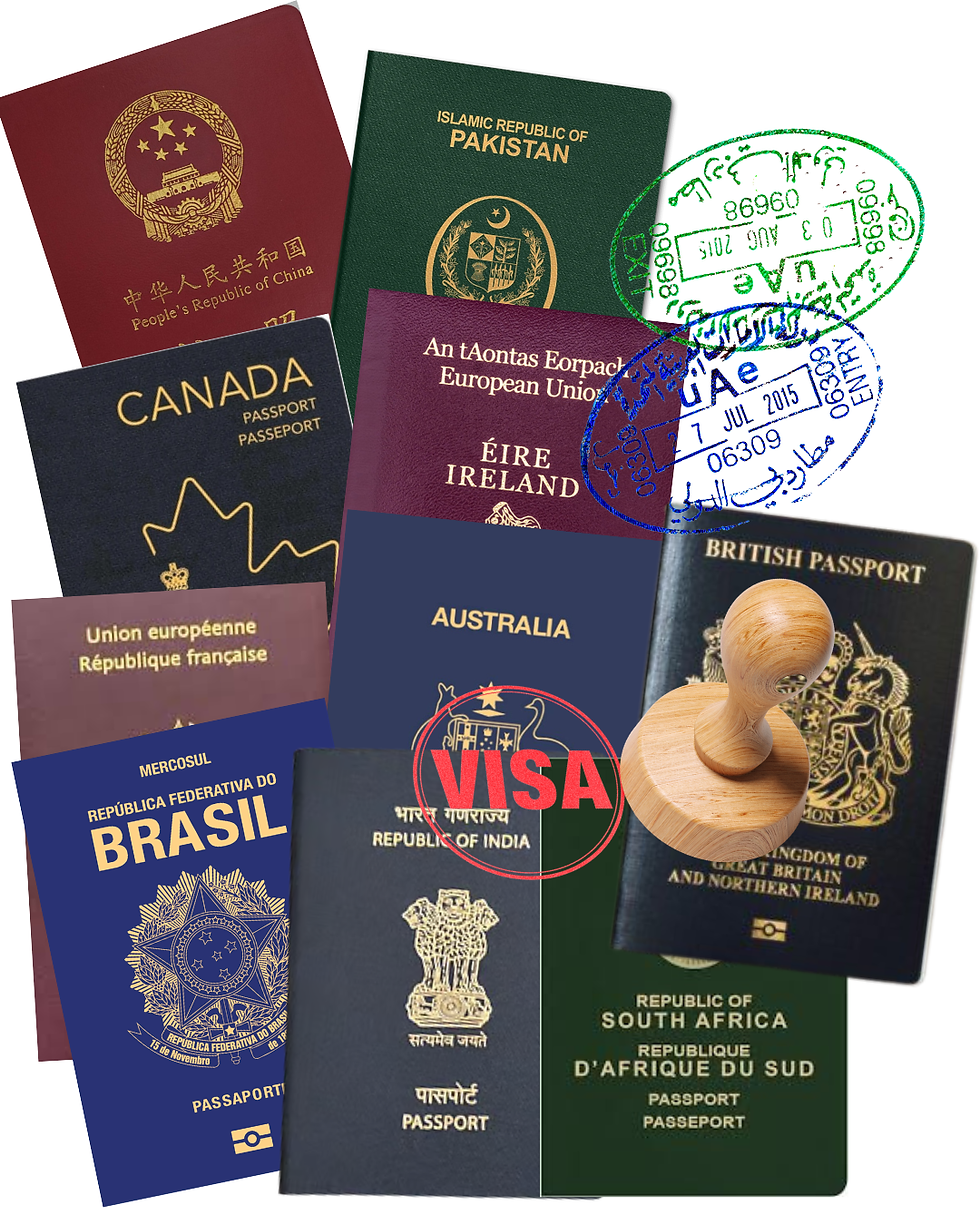
Citizens of more then 80 countries receive a free tourist visa on arrival. This visa is valid for 30 days to 90 days — the period depends on the country of passport origin. To check whether you are entitled to a 30-day or 90-day visa on arrival, please check here.
To enter the country, you must ensure that your passport is valid for at least 6 months from the date of entry. Rest of the world will need to apply for the visa before travel. For all visa-related information, please check here.
Citizens of GCC countries (Saudi Arabia, Qatar, Kuwait, Bahrain, Oman) do not need a visa to enter UAE.
Free visa on arrival:
90 days
Albania
Argentina
Armenia
Austria
Australia
Azerbaijan
Bahamas Islands
Barbados
Belarus
Belgium
Bosnia
Brazil
Bulgaria
Canada
Chile
China
Colombia
Costa Rica
Croatia
Cyprus
Czech Republic
Denmark
El Salvador
Estonia
Fiji
Finland
France
Georgia
Germany
Greece
Honduras
Hungary
Iceland
Israel
Italy
Japan
Kiribati
Kosovo
Latvia
Liechtenstein
Lithuania
Luxembourg
Maldives
Malta
Montenegro
Nauru
Netherlands
New Zealand
Norway
Paraguay
Peru
Poland
Portugal
Romania
Russian Federation
Saint Vincent and the Grenadines
San Marino
Serbia
Seychelles
Singapore
Slovakia
Slovenia
Solomon Islands
South Korea
Spain
Sweden
Switzerland
United Kingdom and Northern Ireland
United States of America
Uruguay
30 days
Andorra
Brunei
Hong Kong, China
Kazakhstan
Macau, China
Malaysia
Mauritius
Monaco
Mongolia
Republic of Ireland
Ukraine
Uzbekistan
Vatican City
Disclaimer: Visa regulations can change rapidly. Always confirm with the airline or the official UAE Government portal before traveling.
How to dress?
Whether you're planning a holiday in Spain, Japan, or the United Arab Emirates, you'll pack practically the same things in your suitcase. In the past, the UAE maintained a conservative approach to dress, emphasising modesty in line with cultural and religious traditions. However, in recent years the country has adopted a more relaxed attitude, particularly in cosmopolitan areas. While traditional attire remains common, visitors will now find a wider acceptance of diverse clothing choices, reflecting the UAE's evolution as a global hub. If you'd like to learn more about traditional UAE dress, read our article.
Below is a guide to appropriate dress in the UAE:
Swimming pools and beaches

Beaches and pools in the UAE look the same as anywhere else in the world, with standard swimwear — bikinis and one-pieces for women, and swim shorts or trunks for men.
Women are not allowed to sunbathe topless, and there are no nudist beaches, but apart from that you'll feel as though you're on a beach anywhere in Europe or the Americas.

It's worth noting that the UAE has many public beaches away from tourist areas that are popular among the country's workforce on their days off or with local families for picnics. These beaches can have a high proportion of men, and for women it can be an uncomfortable experience if visiting during busy weekend periods. You should be prepared to attract stares if you show a lot of skin.




Public places
Jak wszędzie, wybierasz ubranie w oparciu o zdrowy rozsądek i okazję.
Women

Away from beaches and pools, avoid wearing bikinis or other swimwear in shopping centres or areas where you may come into contact with more conservative sections of the local population.

In shopping centres and most public places, sleeveless tops and shorts or skirts (above the knee but not mini) are the norm. Mini skirts are also worn, but security may occasionally say something, particularly in smaller malls or shops.

When heading out to pubs or nightclubs, the dress code inside the venue is in line with most clubs around the world. Don't push boundaries you don't understand or go looking for trouble, and you'll have just as wild and enjoyable a time as anywhere else in the world, surrounded by like-minded partygoers.

Where you may have direct personal contact with more conservative local populations — for example, when visiting remote villages or individual families — it's advisable to avoid sleeveless tops and to wear trousers or shorts that cover the knees.

When visiting a religious site, such as a mosque, you will need to wear long trousers, long sleeves, and a headscarf. You cannot show your cleavage, and clothes can not be see-through.
Men
Away from beaches and pools, don't walk around shirtless.
In shopping centres and public places, T-shirts and shorts are the norm. Sleeveless tops are not banned, but they aren't popular and should be avoided in restaurants or indoor public areas.
As for the rest, the event or venue will determine the level of formality you choose.
When visiting a religious sites, such as a mosque, you will need to wear long trousers (or at least covering your knees) and a T-shirt.
International eSIMs and Local SIM Cards
eSIMs
Tourists can use eSIMs in the UAE without any issues, provided that:
your phone supports eSIM functionality,
your phone is not locked to a carrier,
the provider you choose has coverage in the UAE.
Here is a list of good eSIM options for tourists that you can purchase before your trip and have internet access as soon as you land. The downside of the service is the lack of voice calls.
Airalo
Current packages at Airlo eSIM:
PACKAGE  | Data | Price |
3 days | 1 GB | 4 USD |
3 GB | 8.50 USD | |
7 days | 3 GB | 9 USD |
5 GB | 11 USD | |
10 GB | 18.50 USD | |
15 days | 5 GB | 11.50 USD |
10 GB | 19 USD | |
20 GB | 33 USD | |
30 days | 5 GB | 12 USD |
10 GB | 20 USD | |
20 GB | 34 USD | |
3 days | UNLIMITED | 12.50 USD |
5 days | 20.50 USD | |
7 days | 29.50 USD | |
10 days | 35 USD | |
15 days | 49 USD | |
30 days | 72.50 USD |
Saily
Current packages at Saily eSIM:
PACKAGE  | Validity | Price |
1 GB | 7 days | 3,99 USD |
3 GB | 30 days | 8,99 USD |
5 GB | 11,99 USD | |
10 GB | 17,99 USD | |
20 GB | 30,59 USD | |
Unlimited | 5 days | 17,09 USD |
10 days | 31,49 USD | |
15 days | 44,09 USD | |
20 days | 53,99 USD | |
25 days | 59,39 USD | |
30 days | 64,79 USD |
Holafly
Current packages at Holafly eSIM:
PACKAGE  | Validity | Price |
Unlimited | 1 day | 6,90 USD |
3 days | 12,90 USD | |
7 days | 29,90 USD | |
10 days | 36,90 USD | |
14 days | 47,90 USD | |
20 days | 61,90 USD |
Ubigi
Current packages at Ubigi eSIM:
PACKAGE  | Validity | Price |
Unlimited | 1 day | 12 USD |
1 GB | 7 days | 5 USD |
10 GB | 20 USD | |
Unlimited | 39 USD | |
3 GB | 15 days | 10 USD |
10 GB | 30 days | 23 USD |
25 GB | 49 USD |
Nomad
Current packages at Nomad eSIM:
PACKAGE  | Validity | Price |
Unlimited | 3 days | 18 USD |
5 days | 28 USD | |
7 days | 38 USD | |
10 days | 48 USD | |
3 GB | 30 days | 8,50 USD |
5 GB | 11 USD | |
10 GB | 18,50 USD | |
20 GB | 29 USD |
Best plan by user type:
Validity | User type | PACKAGE | Why? |
7 days | Budget | Airalo 3 GB / 7 days – 9 USD | Very cheap and sufficient for anyone who mainly uses maps, messaging apps, bookings, and general browsing without much video streaming. |
Standard | Airalo 5 GB / 7 days – 11 USD | The best simple balance of price to data for most tourists. 5 GB is usually enough for normal daily use over a week. | |
Heavy user | Holafly Unlimited / 7 days – 29,90 USD | The best choice for people who heavily use maps, social media, video, hotspot, and don't want to worry about data limits. | |
14 days | Budget | Ubigi 3 GB / 15 days – 10 USD | One of the cheapest sensible options for around 2 weeks. Good for anyone who wants internet as a backup and uses it sparingly. |
Standard | Saily 10 GB / 30 days – 17,99 USD | Very good value for money. 10 GB is a reasonable amount for 2 weeks for an average tourist, and the longer validity is no disadvantage. | |
Heavy user | Saily Unlimited / 15 days – 44,09 USD | A strong option for heavy internet users throughout their entire trip. Cheaper than many other unlimited offers for a similar length of stay. |
Tourist SIM Card Offers from UAE Operators
UAE operators offer packages specifically designed for tourists. You'll receive a local number with minutes and data included. These cards must be registered against your passport. A physical SIM can be collected at the airports in Dubai, Abu Dhabi, and Sharjah.
Virgin Mobile
Current Tourist Packages Virgin Mobile UAE:
PACKAGE  | Data | Local (min) | International (min) | PRICE |
3 days | UNLIMITED | NONE | NONE | 100 AED |
7 days | 3GB per day | 30 | 20 | 150 AED |
10 days | UNLIMITED | NONE | NONE | 200 AED |
20 days | UNLIMITED | NONE | NONE | 300 AED |
du
Current Tourist Packages du Mobile UAE (scan QR code from the website):
PACKAGE  | Data | Local/ International (min) | PRICE |
24 hours | 10 GB | NONE | 0 AED |
7 days | UNLIMITED | 100 | 199 AED |
14 days | UNLIMITED | 200 | 299 AED |
28 days | 4 GB | 30 | 49 AED |
28 days | 10 GB | 60 | 99 AED |
28 days | 15 GB | 60 | 139 AED |
28 days | 20 GB | 60 | 189 AED |
28 days | UNLIMITED | 400 | 499 AED |

All tourist plans include exclusive discounts on tickets and at selected restaurants. All discounts can be found in the Al Saada app. (APPLE, GOOGLE PLAY).
e& (Etisalat)
Current Tourist Packages e& Mobile UAE:
PACKAGE  | Validity | Data | Local/ International (min) | UAE Wi-Fi internet | CENA |
Free Visitor Line | 24 hours | 10 GB | 0 | - | 0 AED |
Visitor Line Unlimited Data (*/***) | 7 days | UNLIMITED | 100 | - | 200 AED |
Visitor Line Unlimited (*/***) | 14 days | UNLIMITED | 300 | - | 320 AED |
Visitor Line (*/**) | 28 days | 4 GB | 30 | - | 49 AED |
Visitor Line + (*/**) | 28 days | 6 GB | 30 | - | 79 AED |
Visitor Line Advance | 28 days | 10 GB | 60 | - | 99 AED |
Visitor Line Premium (*/***) | 28 days | 13 GB | 120 | 5 h | 125 AED |
Visitor Line Premium + (*/***) | 28 days | 22,5 GB | 525 | 30 h | 200 AED |
(*) 25% discount on your first 2 Hala taxi rides. The maximum discount per ride is 15 AED.

(**) Free discount app Smiles

(***) Free discount app Smiles and GoChat Messenger
Best plan by user type:
Validity | User type | PACKAGE | Why? |
7 dni | Budget | Virgin 7 days – 150 AED | The cheapest sensible weekly plan. 3 GB per day is usually enough for maps, messaging, bookings, and light social media. |
Standard | du 7 days – 199 AED | Unlimited data and 100 minutes. The best all-round choice for most tourists. | |
Heavy user | du 7 days – 199 AED | Unlimited data with no daily cap to keep track of. Good for heavy users of maps, video, social media, and hotspot. | |
14 dni | Budget | du 28 days– 10 GB – 99 AED | The cheapest sensible option for 2 weeks for anyone who uses data sparingly. Not unlimited, but very cost-effective. |
Standardowy | du 14 days – 299 AED | The best balance of price, data, and minutes. The most versatile choice for 2 weeks. | |
Heavy user | e& 14 days – 320 AED | Unlimited data and 300 minutes. Best for heavy users who also want to make regular calls. |
Voice calls over internet - VOIP
VoIP from the UAE is possible, but only through solutions officially approved by the TDRA (Telecommunications and Digital Government Regulatory Authority).
In the UAE, VoIP voice calls are regulated. Officially, only services provided by licensed operators or approved by the TDRA may be used. Using unapproved VoIP apps is illegal.
❌ In practice, this means the following services will not work 😞 for video/voice calls:

❌ WhatsApp voice/video

❌ FaceTime

❌ Messanger

❌ classic Skype VoIP
✅ Officially confirmed apps approved for calls, remote work and study, including:


To sum up, for an ordinary tourist in the UAE, only those voice and video calling apps that are approved by the TDRA or operate in partnership with a licensed operator are legal.
For private calls, the most practical legal options are:
 | |  |  |
BOTIM | GoChat | Comera | Google Meet |
So in short:
Safest choice for tourists: BOTIM and Google Meet
For video calls and meetings: Zoom, Teams, Webex

WhatsApp, FaceTime, regular Skype, and similar services will not work for video/voice calls. To use these apps you would need a VPN, which is also illegal in the UAE.


Comments